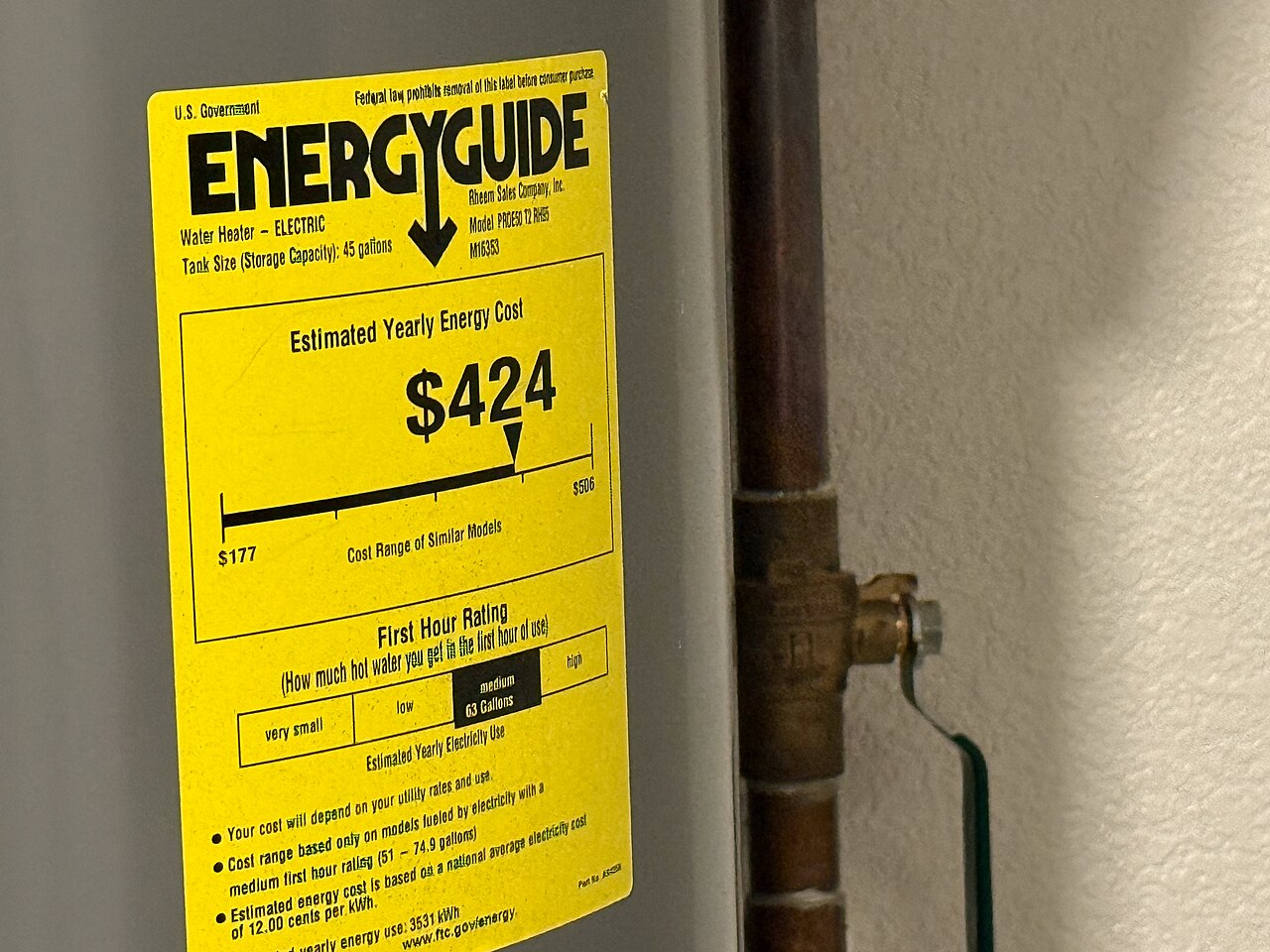
The large dollar amount on a yellow EnergyGuide label is an estimated yearly operating cost, not the appliance's purchase price or a promise about your bill. Before comparing two appliances, check what each estimate covers and whether you are comparing similar models.
That distinction matters when one appliance costs less at checkout but displays a higher annual estimate. The price tag and the EnergyGuide label answer different questions. Keep both figures separate rather than treating either as the total cost of ownership.
Read the label before comparing the numbers
| Label item | What it helps you understand | What to check before comparing |
|---|---|---|
| Estimated yearly operating cost | An operating estimate using stated assumptions | Your actual use and local energy price can differ |
| Yearly energy use | The energy-use figure shown for that appliance | Compare similar appliance types and the relevant capacity or features |
| Range for similar models | Where this model sits within the label's comparison group | Read which models the range covers; it is not a comparison of every appliance |
| Model and equipment details | Which appliance the label describes | Match the label to the exact model you are considering |
The FTC says the estimate uses typical operation and a national average energy price. A household that uses the appliance differently, or pays a different energy rate, should not expect the yellow number to predict its bill.
Use the photograph as a reading example
The reference photo shows a water-heater label photographed in December 2024. Its large $424 figure is labeled as an estimated yearly energy cost. The smaller text includes 3531 kWh of estimated yearly electricity use and an assumed electricity price of 12.00 cents per kWh.
Those are values on this historical label. They are not the water heater's selling price, a current national average, a quote for your home, or a recommendation to buy the pictured model. The useful lesson is where to look for the estimate's assumptions.
A practical comparison starts with two matching questions
First, decide which appliances meet your needs. An energy comparison is less useful if the candidates serve different purposes or capacities. Then read each candidate's own current label and note its estimated energy use, annual cost, and comparison group.
Keep the retailer's actual purchase price in a separate column. If an apparent saving is important to your decision, check the assumptions against your situation before relying on it. This guide does not calculate a payback period or promise a particular saving.
If you cannot find the label, the FTC suggests looking inside the appliance or checking the seller's or manufacturer's website. Confirm the exact model rather than substituting a label from a similar-looking appliance.
EnergyGuide and ENERGY STAR answer different questions
The yellow EnergyGuide label supports an energy-use comparison. ENERGY STAR identifies models that meet the program's efficiency guidelines. One mark should not be read as the other, and neither replaces checking whether the appliance fits the space and the job you need it to do.
Your next step is simple: compare the correct models, keep purchase price separate from operating estimates, and read the assumptions before deciding that a lower yellow number will mean a lower bill in your home. There is no product recommendation or purchase link in this guide.
Sources and photo
The main reference is the FTC's How To Use the EnergyGuide Label To Shop for Home Appliances, checked October 25, 2026. The photograph illustrates a label; the photographed values do not update the FTC's assumptions or establish current prices.
Photo: Tony Webster, EnergyGuide Water Heater, photographed December 24, 2024, CC BY 2.0. The displayed file matches the 1280-pixel version provided by Wikimedia Commons; that version is smaller than the original image. Commons file record. No photographer, manufacturer, or agency endorsement is implied.