A moisturizer with no printed expiration date is not a promise that it will last forever. For a US buyer, the first useful distinction is whether the product is an ordinary cosmetic or a product that is also a drug, such as an SPF moisturizer.
FDA guidance says ordinary cosmetics do not have a general US requirement for a specific shelf life or a printed expiration date. Manufacturers still have responsibility for product safety and for determining shelf life. An absent date does not remove those limits or tell you how long your own opened product remains suitable.
Start with the actual product and its instructions
| What you are looking at | How to approach the date question | Useful next check |
|---|---|---|
| Ordinary cosmetic with no printed expiration date | A missing date does not establish unlimited shelf life | Read the manufacturer's use and storage instructions |
| Product with a stated date or other use instructions | The absence of a general cosmetic date rule is not a reason to disregard its label | Follow the exact product's directions and clarify an unclear instruction with its manufacturer |
| Sunscreen, acne treatment, or SPF makeup or moisturizer | FDA distinguishes drugs and products that are both cosmetics and drugs from ordinary cosmetics | Check the drug labeling, including the printed expiration date |
| A package whose product identity or instructions are unclear | A generic online discard chart cannot settle the exact product's instructions | Identify the product and ask the manufacturer for clarification |
Why a universal countdown is not the answer
FDA explains that shelf life varies with product type, use, and storage. Heat, sunlight, air, moisture, and contamination can affect a cosmetic over time. The same calendar age therefore does not tell the whole story.
Keep containers and applicators clean, and follow the product's storage instructions. A label question should not be resolved by inventing a standard number of months for every moisturizer, relying on smell alone, or assuming a product is safe because no date is printed.
This guide does not diagnose a reaction, approve a product for continued use, or provide a way to extend a stated date. Its purpose is to help you find the right instructions before making a use or replacement decision.
SPF changes which guidance you need
Do not apply the ordinary-cosmetic statement to every item in a bathroom cabinet. FDA identifies sunscreens and acne treatments as drugs, and identifies SPF makeup and moisturizers as both cosmetics and drugs. Its guidance says drug products, including those combined with cosmetics, require expiration dates.
If your moisturizer has SPF labeling, begin with that exact product's drug information rather than concluding that cosmetic date rules mean a printed date is optional for it.
Ask a question the manufacturer can answer
If the instructions do not settle the matter, identify the exact product and ask what shelf-life and storage guidance applies. FDA also suggests contacting the company if you want to know how it tests shelf life and tracks products on the market.
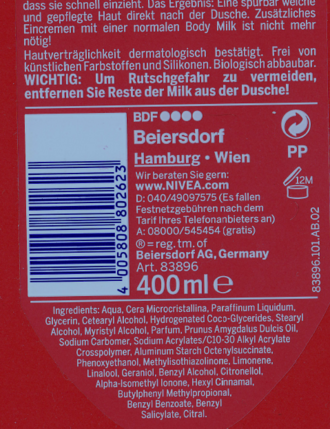
The reference photo is a historical German package photographed in 2013. It illustrates that a cosmetic container can carry several kinds of information in a small space. It is not a current US sale item, a US compliance example, or a recommendation to use the pictured product. This article does not use that foreign label to interpret US requirements or to explain its open-jar symbol.
Sources and photo
Sources: FDA's Shelf Life and Expiration Dating of Cosmetics, content dated February 25, 2022, and Do I need to label my cosmetics products with expiration dates?, content dated June 16, 2022. Both were checked October 25, 2026; that access date is not a claim that a new rule took effect in 2026.
Photo: Jü, INCI-Code Cosmetics V2, June 8, 2013, CC0 1.0. The downloaded PNG is unchanged and uncropped. No photographer or brand endorsement is implied. There is no product offer, seller recommendation, or affiliate purchase link in this guide.